Available
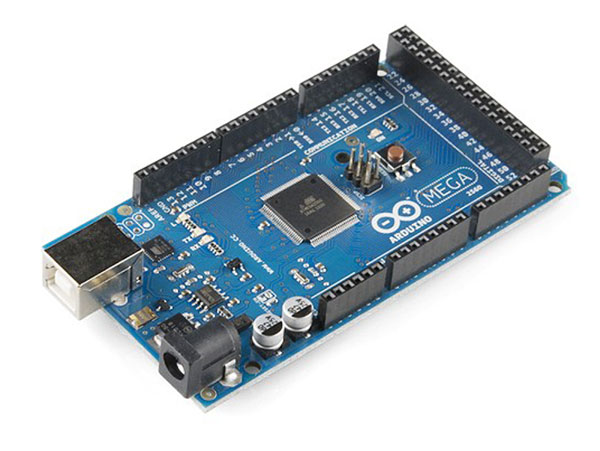
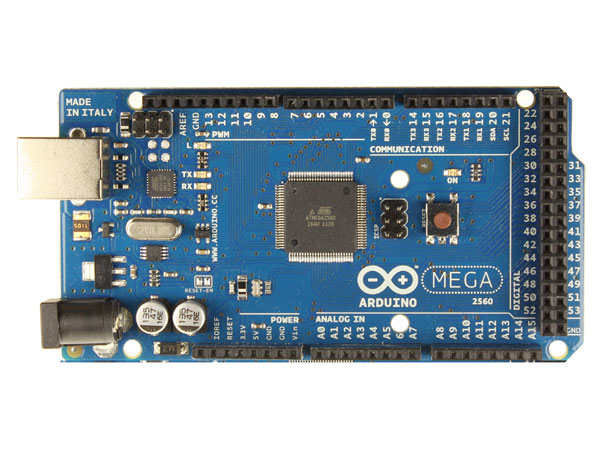
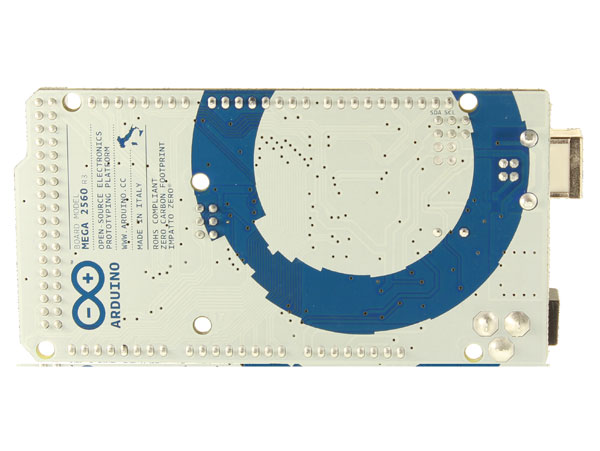
Arduino Mega 2560 Rev3 is a development board based on the ATmega2560 microcontroller, intended for projects that need to handle a large number of signals and peripherals from a single programmable controller. Its input/output capacity and communication resources make it particularly suitable for systems where a smaller Arduino board may be limited by the number of available connections.
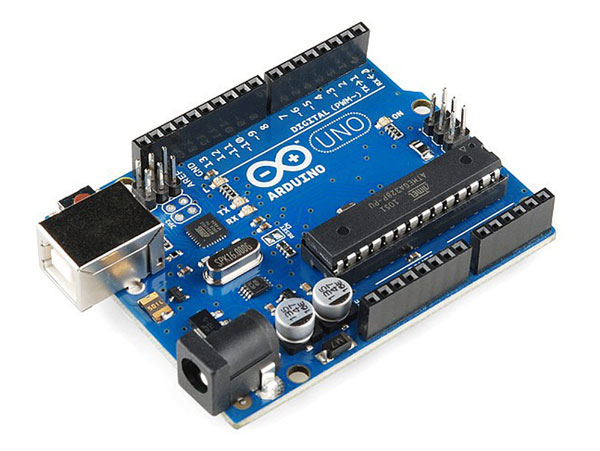
The board combines numerous digital and analogue inputs and outputs with four hardware UART serial interfaces, together with SPI and I²C/TWI communication. This allows sensors, actuators, communication modules and other peripherals to be connected at the same time, making it suitable for applications such as robotics, prototype automation and 3D printing systems. Its connector layout retains physical compatibility with most shields designed for Arduino Uno and with those used by the earlier Duemilanove and Diecimila boards.
Programs can be uploaded from the Arduino IDE through the USB Type-B connector. An ATmega16U2 handles USB-to-serial communication, while the bootloader allows the ATmega2560 to be programmed normally without an external hardware programmer. When required, the microcontroller can also be programmed directly through the ICSP header.
The board can be powered from the USB port or from an external supply, with the available power source selected automatically. For external power, Arduino specifies a recommended input range of 7–12 V. Applying voltage directly to the 5 V or 3.3 V pins bypasses the board regulator and is not recommended by the manufacturer, which should be taken into account when integrating the Mega 2560 Rev3 into an externally powered system.
| Brand | Arduino |
| Manufacturer reference | A000067 |
| Model | Mega 2560 Rev3 |
| Microcontroller | ATmega2560 |
| USB-to-serial controller | ATmega16U2 |
| Operating voltage | 5 V |
| Recommended input voltage | 7–12 V |
| Input voltage (limit) | 6–20 V |
| Digital I/O | 54 |
| PWM outputs | 15 |
| Analogue inputs | 16 |
| Analogue input resolution | 10 bits |
| Hardware UARTs | 4 |
| Communication interfaces | UART, I²C/TWI and SPI |
| Current per I/O pin | 20 mA |
| Maximum current from 3.3 V pin | 50 mA |
| Flash memory | 256 KB; 8 KB used by the bootloader |
| SRAM | 8 KB |
| EEPROM | 4 KB |
| Clock speed | 16 MHz |
| USB connector | USB Type-B |
| Programming | USB using Arduino IDE or ICSP header |
| Dimensions | 101.52 × 53.3 mm |
| Weight | 37 g |